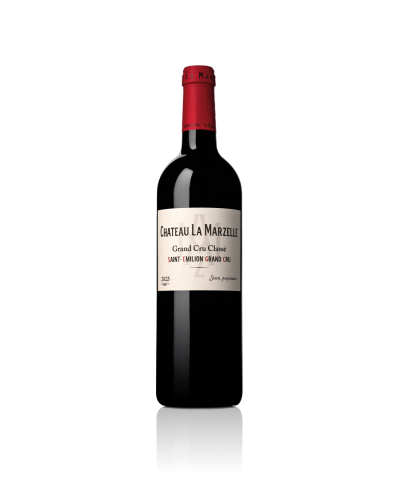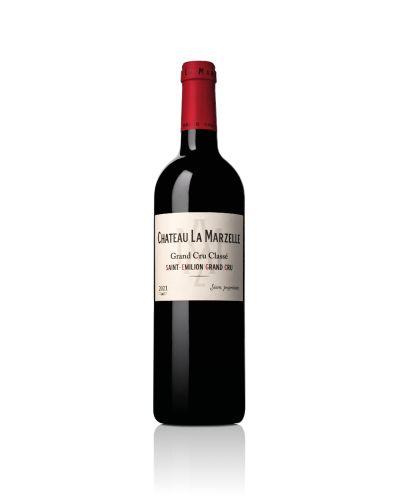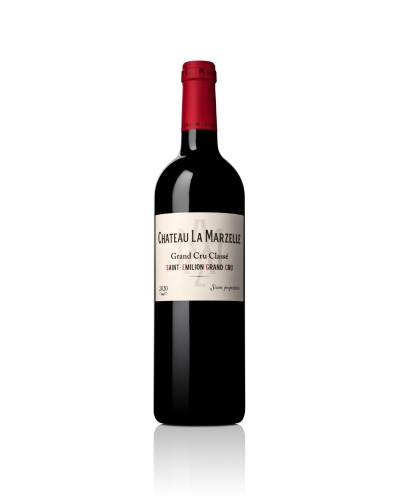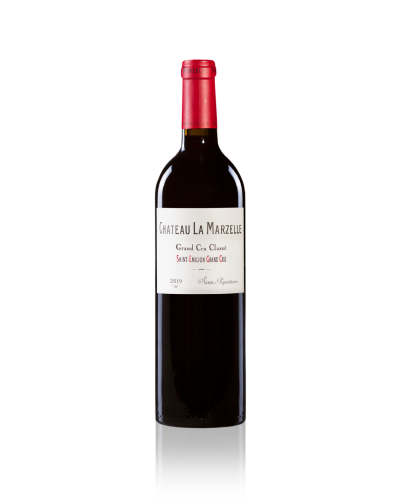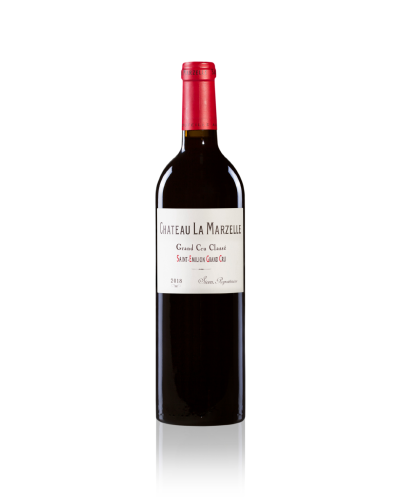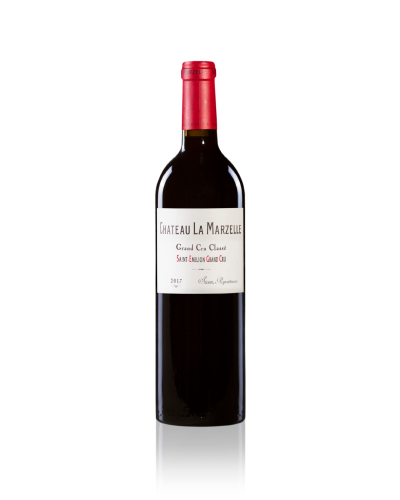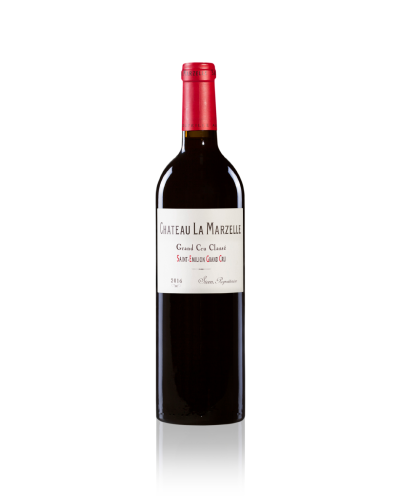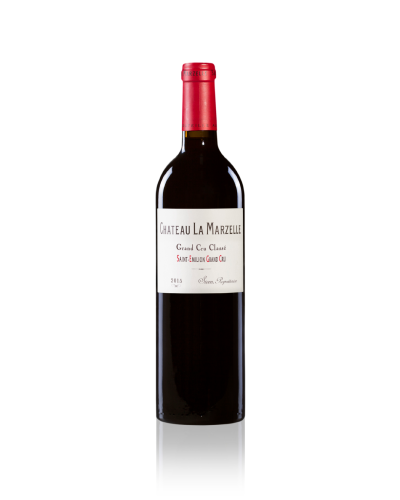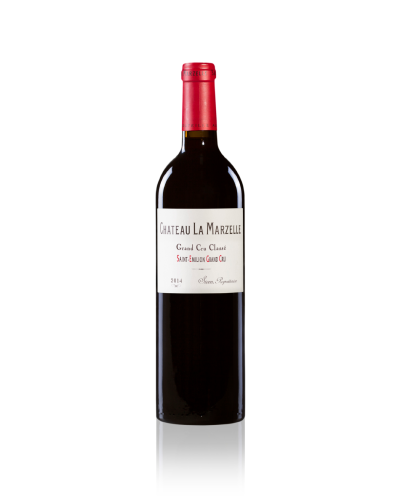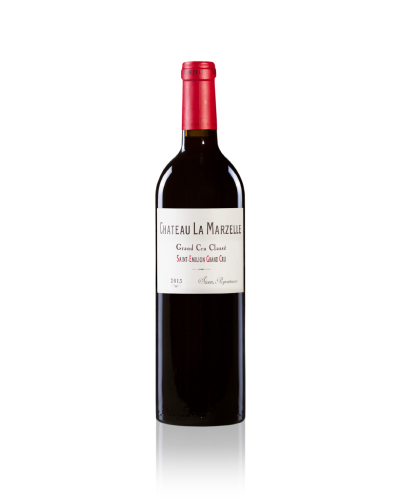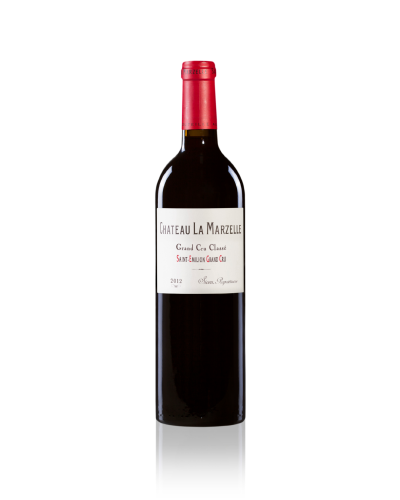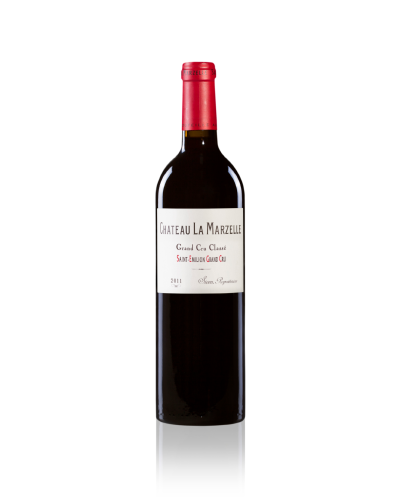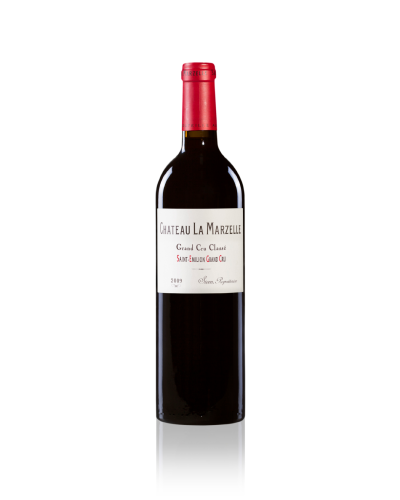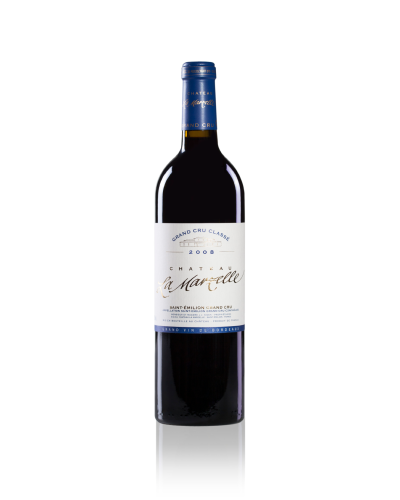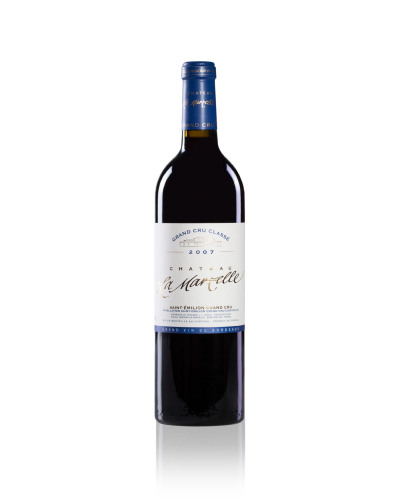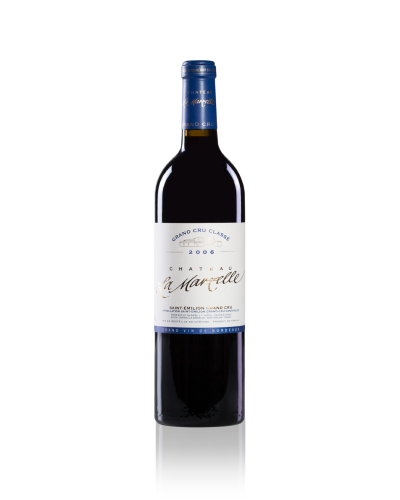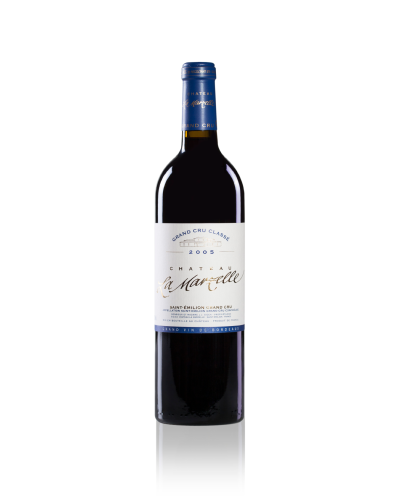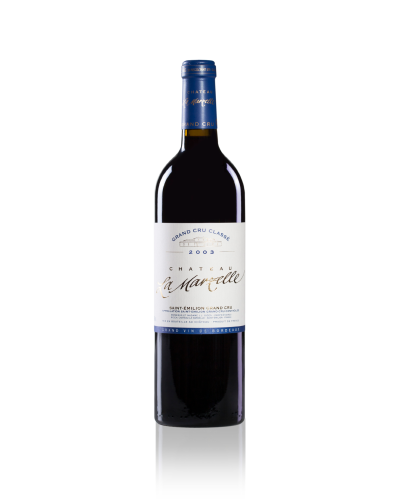
2024 Château La Marzelle
Saint-Émilion Grand Cru Classé
“I know only one who is capable of doing this in Saint‑Emilion.”
The origin
- Vineyard
- 14.95 ha of adjoining land
- Grape varieties
- 80% Merlot, 15% Cabernet Franc, 5% Cabernet Sauvignon
- Density
- 5 700 à 7 150 vines/ha
- Âge moyen
- 30 years
- Production
- 48 000
- Situation
- Upper terrace of Saint-Emilion formed by the former Isle riverbed
- Pruning
- Bordelaise method (2 canes per vine)
- Alcohol
- 13%
The year 2024 begins after an exceptionally rainy winter, the wettest since 2000, accompanied by an unusual mildness. These conditions lead to a very early bud, even though the winter eggs of the mildew are already massively ripe. Thanks to the mild temperatures of late March and early April, the bud is relatively homogeneous. However, from mid-April, a persistent freshness settles and is maintained until mid-July, contrasting with the early start of the season. The mildew epidemic breaks out with unprecedented precocity and intensity: from April 22, the first symptoms appear. This situation requires an exceptionally sustained pace of treatment, up to three interventions per week.
Flowering begins around May 27 and fortunately benefits from a meteorological lull between May 25 and June 13. The knotting is satisfactory, although the flow affects the potential yield of some plots.
Summer is gradually settling in from June 30. July and August are marked by a welcome water deficit, associated with temperatures above seasonal normals between mid-July and mid-August. The season begins on July 27 and progresses slowly, despite moderate drought and favorable summer temperatures. Mid-season is only reached around August 10 in the earliest parcels, which postpones the forecasts for the start of the harvest around September 25.
The water deficit increased until the end of August, placing the vine under moderate to strong water constraints, particularly qualitative for the maturation of seeds and film tannins.
At this point, all hopes are allowed regarding the quality of the vintage.
Unfortunately, the heavy rainfall in September diluted the grapes and accelerated the dynamics of the harvest under the pressure of botrytis. Merlots are harvested from September 24, followed by Cabernets Francs on October 4 and Cabernets Sauvignons on October 8.
Reviews
Yves Beck (PRIMEUR)
“85% Merlot, 13% Cabernet Franc, 2% Cabernet Sauvignon Vignoble d'un seul tenant avec un peu d'argiles bleues, des graves et du sable ; 3 types de sols. Élevage dans 80 % de barriques neuves et 20 % dans des amphores en terre cuite. Le bouquet se révèle subtilement, discrètement, avec des nuances de sureau, de cassis et de menthe poivrée. En bouche, le vin cumule tempérament et largeur. Il affiche un caractère légèrement crémeux en attaque et dispose de tannins porteurs, encore un peu anguleux, en phase avec la fraîcheur de la structure acide. Cette dernière livre du tempérament et un côté ciselé, tandis que les tannins se chargent de la vigueur. Un vin qui n'a pas forcément une grande profondeur, mais qui est doté d'une énergie vivifiante. Il s'en retrouve tonique, salivant et sapide. 2028-2044”
Jean-Marc Quarin (PRIMEUR)
“Couleur noire. Nez intense, au fruit mûr et suave, jamais aussi proche d'un Pomerol, et la bouche suit, avec sa texture moelleuse. Son goût de fruits noirs, son corps velouté, caressant et séveux. Je n'en connais qu'un capable de faire ça à Saint-Emilion.”
Denis Hervier - Bettane & Desseauve (PRIMEUR)
“Attaque pulpeuse, puis une belle allonge portée par des tannins savoureux et fondus.”
Bernard Burtschy (PRIMEUR)
Alexandre Ma (PRIMEUR)
“Château La Marzelle, renowned for its fresh and delicate profile, has always relied on highly ripe grapes to reach its full potential. As such, in vintages with limited sunlight, it struggles to fully unfold. After swirling the wine, I could only catch faint notes of elegant strawberry, red plum and a hint of blood orange peel. Yet, its silky, creamy texture captivated me. On the palate, it caressed the tongue like a light cream, with a subtle, savory umami note reminiscent of miso soup, which was truly delightful.”
Christer Byklum (PRIMEUR)
“Ruby, dark fruits, red berries, anise, spices, nuanced nose. Fresh acidity, ripe tannins, blackberries, juicy, detailed, elegant, nuanced, long finish.”
James Suckling (PRIMEUR)
“Balanced and flavorful, this red proposes notes of red berries and baking spices on the nose. It's medium-bodied with fine tannins. Seductive, with a fruity edge and a round finish.”
Colin Hay (PRIMEUR)
“(Saint-Émilion; 80% Merlot; 15% Cabernet Franc; 5% Cabernet Sauvignon; 13% alcohol; certified organic; tasted twice, the second time at the Association des Grands Crus Classés de St-Emilion press tasting at Dassault). Violets, peonies and a lovely waft of cedar. A hint of walnut oil, more usually found in riper vintages and maybe a little Kalamata olive tapenade. Black cherry and mulberry fruit. Plush and with very soft yet tactile tannins, this glides effortlessly over the palate. The steep upward progression here continues, certainly when one takes note of the challenges of the vintage.”
Vertdevin Magazine (PRIMEUR)
Falstaff: Peter Moser (PRIMEUR)
“Dark ruby, purple reflections, subtle edge brightening. Fine touch of wood, dark forest berries, blackberry confit, tobacco nuances, candied orange zest. Juicy red berry, fresh acidity, mineral-salty, a light-footed, lively food companion with a currant finish.”
Markus Del Monego (PRIMEUR)
“Dark purple colour with violet hue and black core. Quiet opulent and expressive nose with ripe fruit, e.g. blackberries, plums and mulberries, aromatic herbs in the background, a whiff of vanilla. On the palate well structured and balanced, ripe yer firm tannin and very good length, sweet fruit in the finish.”
Ronald de Groot (PRIMEUR)
Jeff Leve (PRIMEUR)
“Medium-bodied, chocolate-covered plums, and cherries, along with a refreshing touch of mint provide everything this early-drinking, easy-to-like wine needs.”